
The Great Sheltering
Record numbers of Brits are flying south in the hope of escaping the incessant rain. But as I learnt on a recent trip to Andalusia, nowhere is safe from climate change.

We were ten minutes from Gibraltar when the captain announced that he was having trouble reaching air traffic control and would need to keep us in a holding pattern. “Hopefully, I’ll have more news in 30 minutes.”
You can imagine the thoughts that flashed through my mind as we flew parallel to the Andalusian coast. Had Putin launched a sneak attack on “the Rock” in the latest attempt to test Britain’s air defences? Or had a member of the ground staff failed to set their alarm and overslept?
In the event, the answer lay in the novel I’d brought on holiday. In What We Can Know, Ian McEwan transports us to 2119 when most of Europe is underwater and people have migrated to the last remaining areas of high ground, together with the records and artefacts from the before times. Without going into too much detail, the plot revolves around a climate-denying poet and the attempt 105 years later by a literary scholar to track down his last great work, a collection of sonnets known as a Corona. Part literary detective story, part ode to our vanishing post-pandemic present, the novel is animated by McEwan’s reflections on the “great derangement” – a term, he informs us, that came into use in the mid-2030s to denote “the vengeful fury of weather systems” and our failure to address climate change.
That fury had just unleashed a series of storms on Andalusia – an “atmospheric river” as one meteorologist put it – that saw Cadiz and the surrounding countryside receive a year’s worth rain in the space of a month. Damns overflowed, rivers broke their banks and 20 percent of the region’s vegetable crop was destroyed.
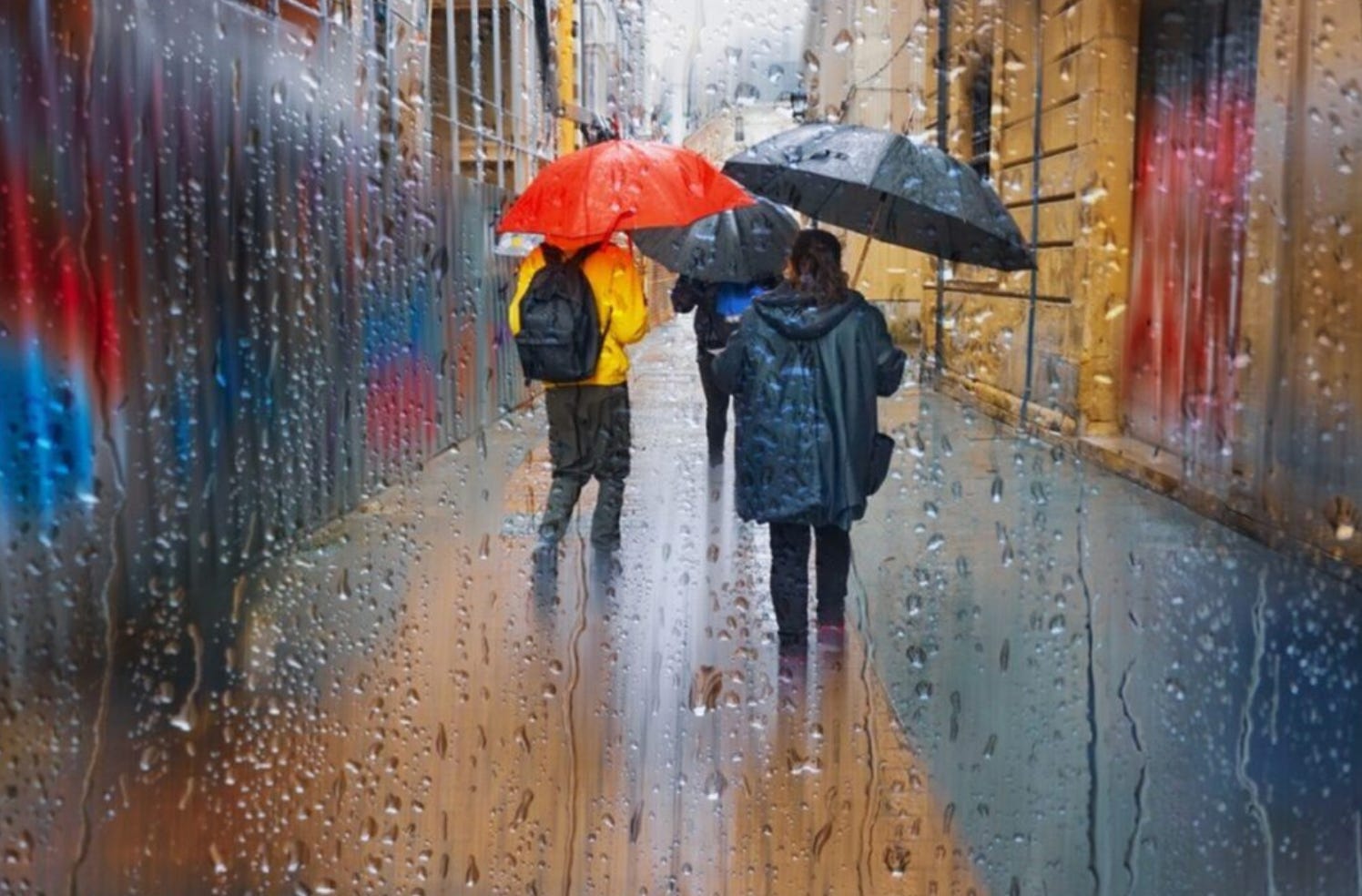
The storms also brought gusts of up to 80mph and, although on the morning we set off from Heathrow, the winds had eased, the rain had not, and the ground staff at Gibraltar were only just coming to terms with the damage. At first, the captain announced there had been a power outage at the airport; then, that Gibraltar’s radar was down. He’d tried calling the air tower repeatedly. I imagined men in high-vis jackets perched on top of the Rock straining to upright the radar mast.
After an hour hovering over the Mediterranean, during which no word or sign came from below, the captain had had enough and bent the wing toward Malaga. Bussed back to Gibraltar, we were only three hours late, but now the heavens had opened again and we had a new problem: where to take shelter?
Luckily, my wife and I had booked an Airbnb in a white village on a limestone outcrop high above Conil and the floodplain of the Barbate River. Over the centuries, Vejer de la Frontera has been a refuge for Romans, Visigoths, Vandals, Arabs, Jews and Christians. In the 1930s, it even provided sanctuary for rebels fleeing General Franco’s fascist forces. However, it was the Moors, who occupied Vejer from 711 to the Christian reconquest in 1248, who left the most indelible impression. Their influence can still be seen in Vejer’s principal church with its minaret disguised as a bell tower and its castle with its crenelated battlements dating to the eleventh century.
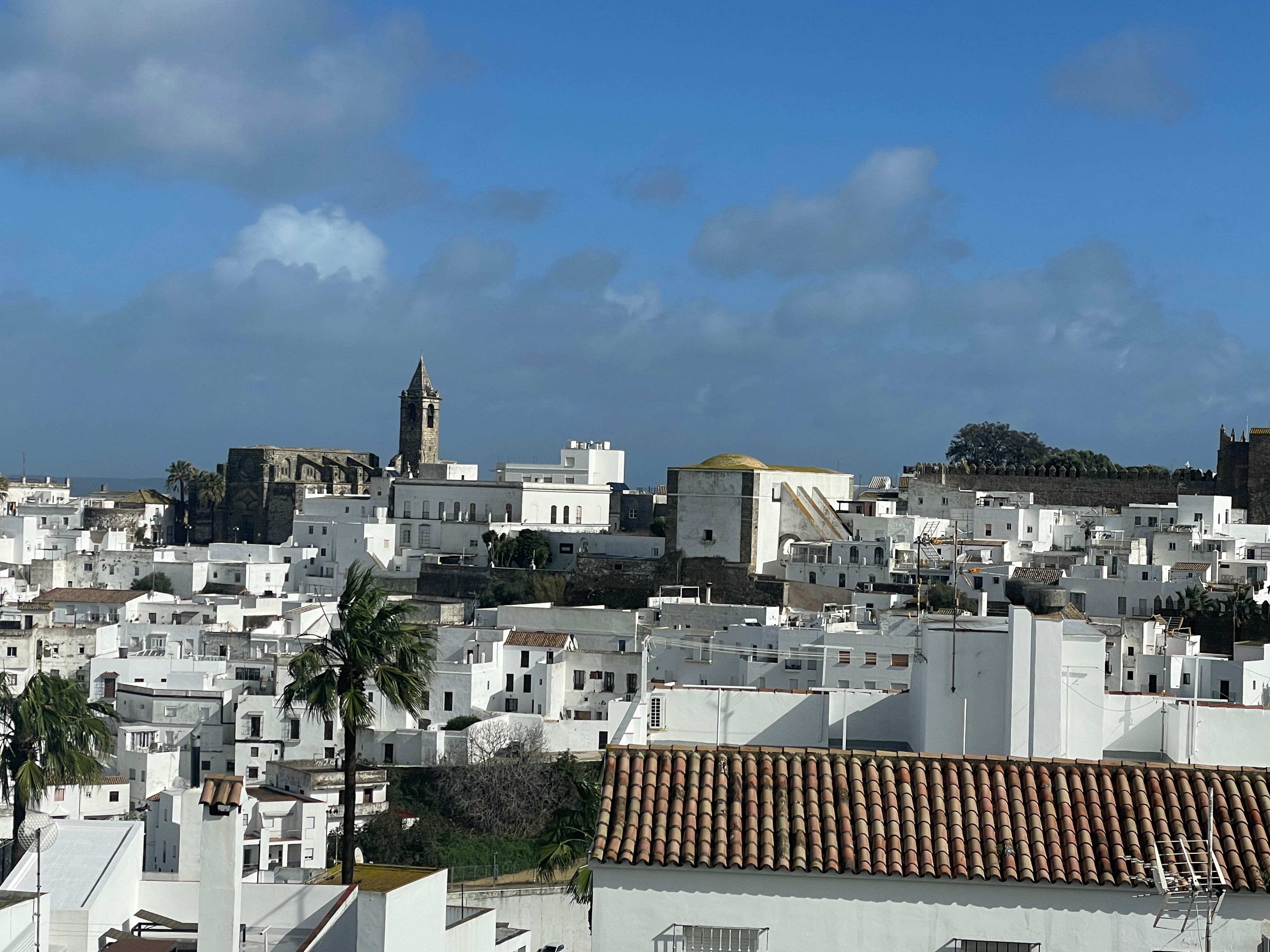
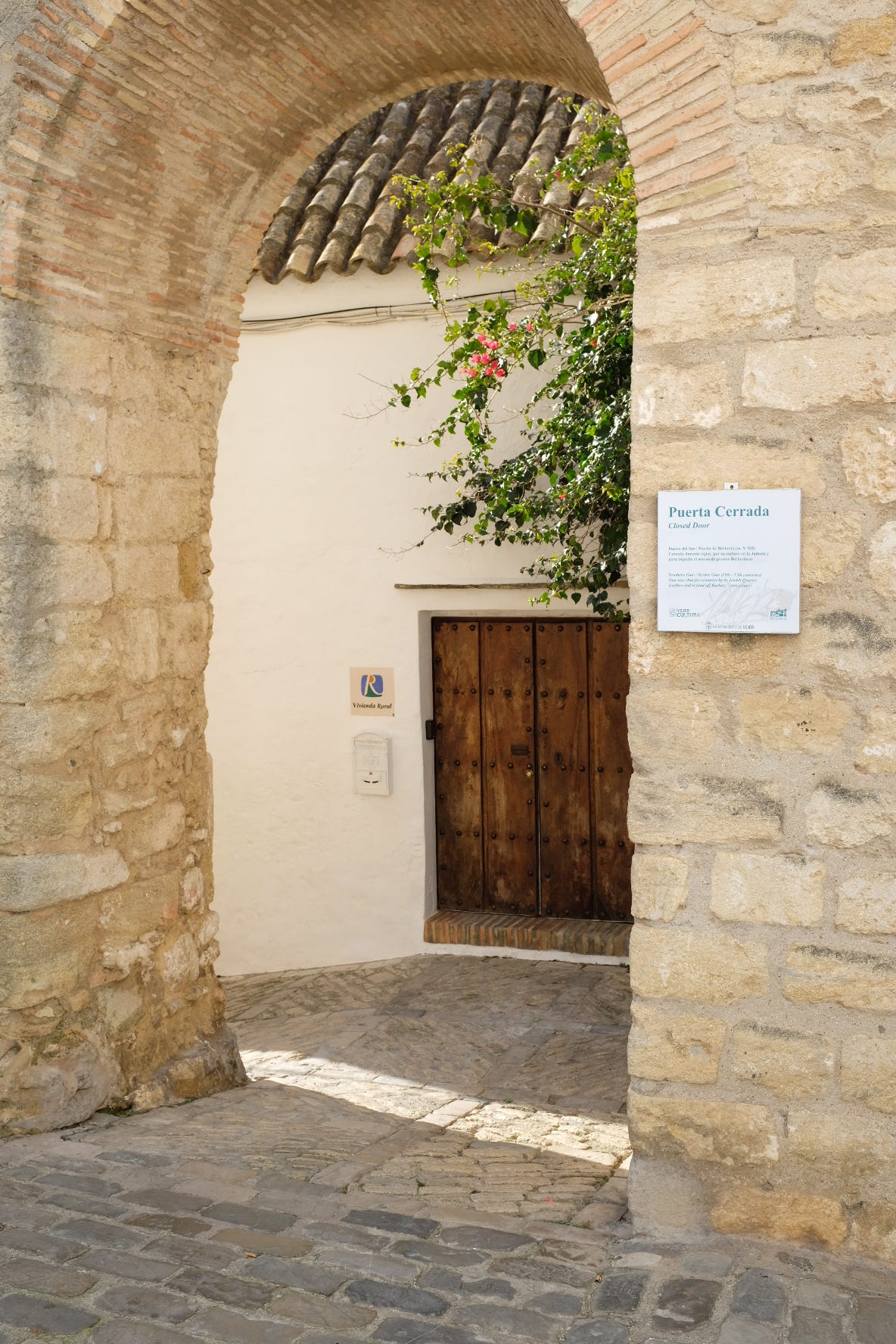
The houses are built directly into the castle’s wall and walking the town’s cobbled alleyways with their narrow passages and blind turns one has the sense of having wandered into a maze. The streets have evocative names that speak to Vejer’s rich history of confinement – a particular favourite of mine is Paseo de las Cobijadas, “Walkway of the Sheltered Ones”, a reference to the nuns in dark cloaks who used to stroll here in search of cooling breezes. We had no such problems and took shelter in the Jewish quarter near the Puerta Cerada, a door on the southwestern side of the castle, that in medieval times had kept out marauding pirates. Every now again the clouds parted, bathing our terrace in sunlight, but most days were spent hunkered down as rain lashed the windows and we chased drips around our bedroom.
We were not the only ones. For the past six weeks, most of Europe has been similarly confined. The rain and floods have been Biblical, exceeding the forty days and forty nights described in the Book of Genesis. When will the deluge end, many have been asking? But what if it has only just begun? And if so, what are we going to do about it?
To judge by Trump’s latest announcement, F-all. On Thursday, the day after scientists warned that the Earth’s climate was closer than had been thought to a “point of no return”, the Deranged One repealed a scientific finding that required the US’s Environmental Protection Agency to combat global warming, paving the way for even more greenhouse emissions. From now on US car manufacturers will no longer be required to transition to electric vehicles and companies will be free to ignore carbon caps.
And what of us? Boarding a plane at Heathrow in the dead winter and flying 1,500 miles south in the hope of escaping the incessant rain is the definition of wishful thinking. But if so, we are not the only ones. Despite the delays and cancellations, record numbers of Brits are holidaying abroad this year, with adults aged 25 to 34 leading the charge. No doubt this reflects pent-up demand from the “lost years” of the pandemic. But if so, it is further evidence of our collective derangement because if Covid-19 taught us anything it is that pandemics are also a product of climate change and a world out of balance.
And with the arrival of AI and its seemingly insatiable demand for energy, that imbalance is only going to worsen. Perhaps, rather than venturing outside, we should all be hunkering down and preparing for “the great sheltering”.
Maybe we won’t get on that return flight to London. After all, where better to see out the end of days than a hilltop village with views ( on a good day) of Africa?