
Lockdown Redux
Five years on from Covid-19, there can be little doubt that lockdowns were a disaster. But why is it that critics find it so difficult to accept that by March 2020 we had no alternative?

The day before Dame Heather Hallett delivered her damning verdict on the government’s decision-making during the pandemic (“too little, too late”), I was invited to speak at a curious event at Worcester College, Oxford.
Organised by the Committee for Academic Freedom, the event was billed as “a rigorous [and] engaging exchange” on the pros and cons of lockdowns and an antidote to the UK Covid inquiry, which, having spent two years collecting evidence and interrogating 167 witnesses at a cost of nearly £200m, is now the most expensive in British history.
Even though the panel featured such prominent lockdown sceptics as Sunetra Gupta – Professor of Theoretical Epidemiology at Oxford University and a leading advocate of the “herd immunity” approach - I was confident that we would be able to agree on some basic facts and explore the evidence dispassionately, something that had proved nigh impossible during the pandemic.
Going into the debate my view was that lockdown had been a blunt instrument that had inflicted considerable damage on the economy and people’s mental health. But by the third week of March 2020 there had been no other way of slowing transmission of the coronavirus and relieving the strain on the NHS.
As Lady Hallett put it the following day: “The failure to appreciate the scale of the threat, or the urgency of response it demanded, meant that – by the time the possibility of a mandatory lockdown was first considered – it was already too late and a lockdown had become unavoidable.”
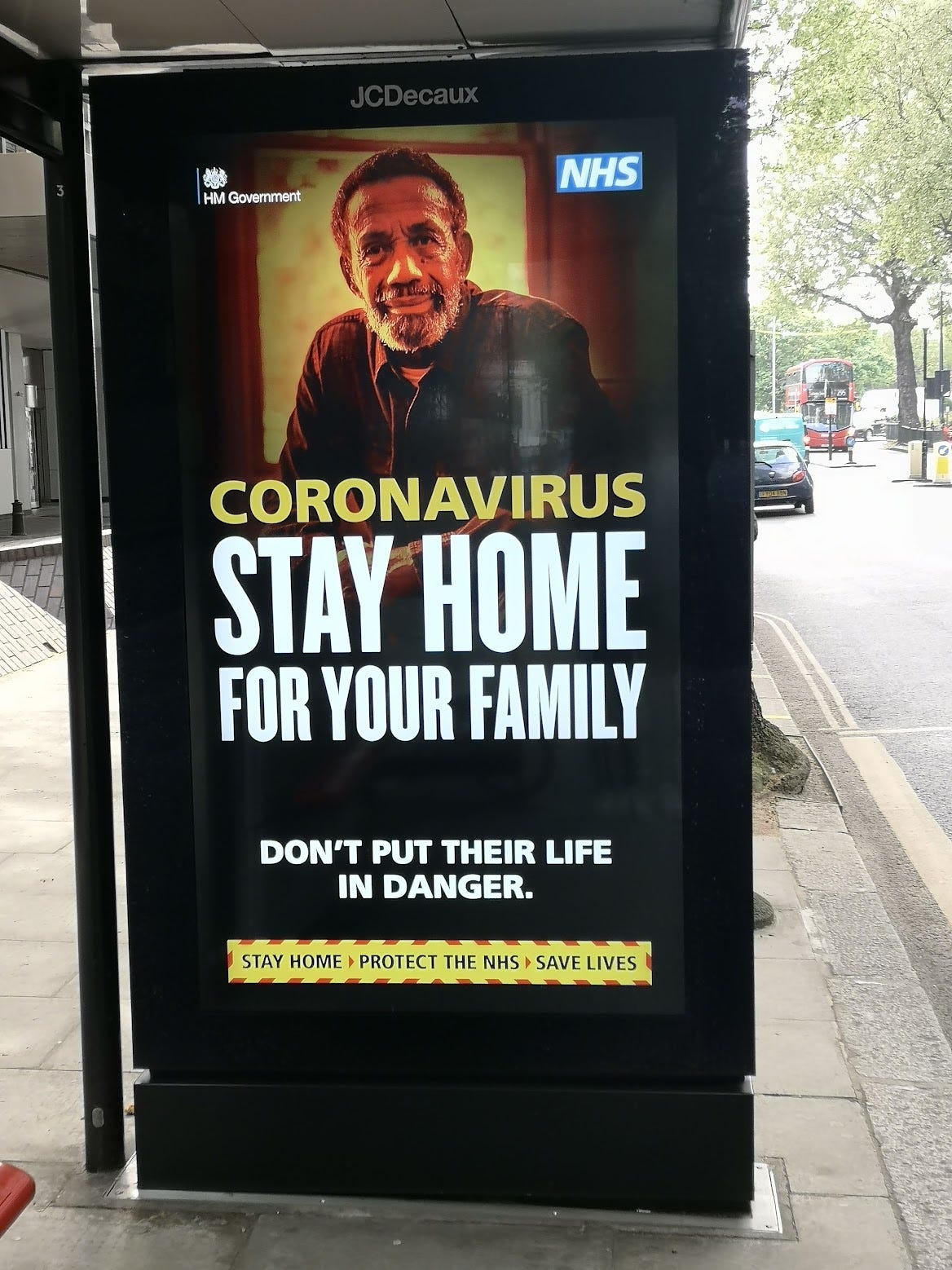
I made a similar point during the panel discussion, citing the findings of Imperial modellers that had Britain locked down on 16 March rather than 23 March, as many as 23,000 lives might have been saved. The message “stay home, protect the NHS, save lives” had come a week too late.
But as rapidly became clear, this was not a conclusion that Gupta, who as a signatory of the Great Barrington Declaration had advocated shielding the elderly and most vulnerable while allowing the virus to spread to the rest of the population, was prepared to accept. Nor was it one that met with the approval of the Oxford audience.
During the Q&A that followed our discussion, speaker after speaker expressed fury with the damage that lockdowns and school closures had inflicted on young people’s mental health to cheers from the audience. Nor were Oxonians in a mood to hear that in March 2020, when Imperial’s Neil Ferguson came out with his infamous model predicting that as many as half a million Brits might die if we did not lockdown immediately, there had been no alternative.
In the spirit of fostering an open debate, CAF had extended an invitation to Ferguson but he declined to join the panel (his last public appearance was on 25 April 2020 when he was interviewed by UnHerd’s Freddy Sayer). I subsequently learned that such was the bad blood between Gupta and other prominent proponents of lockdown, such as Christina Pagel and Devi Sridhar, that they had been unwilling to share the same stage. Thus, it fell to yours truly to provide “balance” to the other speakers who, besides Gupta, included Toby Green, professor of African history at King’s College, London, and a prominent Left-wing critic of the lockdowns, and Hugh Montgomery, Chair of Intensive Care Medicine at University College London, who could speak directly to the experience of physicians on the Covid frontline.
It was an odd position to find myself in – I am a historian, not an epidemiologist – and at times it felt as if I was there to provide a target for point-scoring. Indeed, midway through our discussion Green quoted a passage from the first edition of my book, which was published six months before the emergence of Covid-19, in which I had pointed out that the World Health Organization had a poor record when it came to predicting pandemics and that in 2009 it had fostered widespread panic about a novel swine flu, only for the virus to turn out to be no more severe than a regular seasonal influenza.
It is always disconcerting to find oneself quoted out-of-context. The swine flu, as we now know, was a very different virus to SARS-CoV-2, the coronavirus that causes Covid-19. For one thing, in 2020 no one had immunity to the coronavirus, whereas the 2009 swine flu was a mutation of a pre-existing H1N1 influenza virus. Moreover, SARS-CoV-2 had a much lower infection fatality rate than Covid – around 0.03 as opposed to 0.66 - and although the unexpected emergence of the swine flu in Mexico in the spring of 2009 had led to the outlay of billions of dollars on emergency vaccines, there was never a possibility that the National Health Service would be overwhelmed.
This was not the case in 2020. On the contrary, as early as late February and certainly by the second week in March, it was clear that a “wait-and-see” approach of allowing the virus to spread while mitigating its worst impacts risked disaster and that, in the absence of a vaccine, restrictive measures aimed at suppressing transmission would be necessary.
Note that I write “risked” disaster. In the spring of 2020, there was no way of knowing that the NHS would be overwhelmed and whether the Imperial model was accurate. Nor can we know for certain if the then Prime Minister Boris Johnson’s failure to heed the call for a brief “circuit breaker” in September 2020, only to order a second lockdown six weeks later, contributed to the 70,000 deaths during the second wave in the winter of 2020-2021.
In her report on Friday, Hallett described Johnson’s dithering as “inexcusable” and argued that had Johnson brought in a circuit breaker then the second lockdown “might conceivably have been avoided altogether” (italics inserted).
But as Carl Heneghan, the director of Oxford’s Centre for Evidence-Based Medicine and a close associate of Gupta, pointed out on BBC Radio 4’s Today programme the day after the publication of Hallett’s report, words like “might” and “may” indicate that Hallet’s conclusion rested on Ferguson’s disputed model and were hypotheses, not evidence. “What we really needed to understand the causal chains of transmission … was to have a proper epidemiological investigation,” he complained.
I have some sympathy with Heneghan’s criticisms. His complaint was echoed this week by Unherd and other long-standing critics of the inquiry process such as the former Spectator editor Fraser Nelson. Writing in the Guardian, even Devi Sridhar, who broadly supported Hallett’s conclusions, wondered “what it adds to our understanding of what happened politically, and what lessons it offers for the future”.
However, Hallett’s brief was to “assess decision-making about non-pharmaceutical measures and the factors that contributed to their implementation”. It was never part of her terms of reference to examine the epidemiological modelling and the reliability of the projections made at the time. That would have been a very different inquiry, one that would have been better conducted by an organisation like the Royal Society.
It is also worth pointing out that during the inquiry Hallett took witness statements from both Heneghan and Gupta, where they set out their concerns about the assumptions underlying Ferguson’s model and why by March 2020 they thought sufficient immunity had accumulated in the population to obviate the need for a lockdown. Heneghan was also given ample opportunity to explain why, in September 2020, when he and Gupta met with Johnson and other experts to discuss a circuit breaker, he believed Covid was already “endemic” to the UK. However, during cross-examination last October by the inquiry’s deputy counsel Andrew O’Connor, Heneghan struggled to explain what he meant by endemic and why there had been a surge in deaths during the second wave – something that suggested we were still very much in the epidemic phase of the pandemic.
You can see Connor’s cross-examination of Heneghan here (the key exchanges are at 6.06.25). I leave it you to judge whether he was a convincing witness.
Underpinning these disputes was the claim made by Gupta in March 2020 that up to half the British population may have already been infected with Covid. If true, this would have meant that we were already on course to achieve herd immunity and that infections would soon peak, obviating the need for the spring lockdown (by contrast, the Imperial model assumed that by March less than three percent of the UK population had been infected and recovered, leaving 97 percent of the population susceptible to infection and hospitalisation).
In his book Spiked, Jeremy Farrar, the former director of the Wellcome Trust and a prominent member of SAGE, points out that even by September antibody data suggested that just six percent of the population had been infected. Describing the Great Barrington Declaration as “ideology masquerading as science”, Farrar writes that the only way Declaration proponents could explain the discrepancy between their theory and the antibody data was to posit that people were protected by “immunological dark matter”. But no evidence was presented to support this claim at the time and, to my knowledge, no evidence has emerged for it since.
I went into the panel discussion willing to be corrected. But when I cited the antibody data, Gupta insisted the government statistics were misleading because people who had been infected and who had cleared Covid infections prior to the commencement of testing in February 2020 would not necessarily have detectable antibodies six months later. This may well have been the case – absence of evidence is not evidence of absence - but it is no basis on which to make decisions affecting peoples’ chances of living or dying in a rapidly developing pandemic crisis. And that, as Hallett put it, was the “unenviable” position politicians found themselves in March 2020 when they were faced with the “agonising” decision whether or not to lock down.
But as I have argued elsewhere, in January 2020 we didn’t need epidemiologists to tell us that Covid-19 was a “once in a century pathogen” and that we were on a collision course with an asteroid. The images from China of deserted city centres and hospitals being constructed overnight should have told us that something unprecedented was coming our way. And when in February we saw those pictures from Lombardy of intensive care wards filling with elderly patients and military trucks loaded with corpses there could be little doubt.
But as Hallett pointed out, February had been a “lost month” for decision-makers. That the UK avoided similarly apocalyptic scenes to Italy was only thanks to the last-minute repurposing of NHS wards and the heroism of doctors and nurses working round the clock to relieve the pressure on intensive care units (ICUs).
As Kevin Fong, the national clinical advisor for NHS England’s Emergency Preparedness Resilience and Response, told Hallett when he testified at the inquiry last year, “the scale of death was truly astounding” and by June 2020, when the first wave ended, the system was “broken”.
At the panel discussion, Hugh Montgomery, who served on ICU wards throughout the pandemic and whose patients included the children’s author Michael Rosen, made a similar point. It wasn’t just elderly patients like Rosen who threatened to overwhelm ICUs but people in their 40s with comorbidities. Covid was a “systemic multi-organ infection” that proved “far worse” than anyone had anticipated, he said.
Writing in today’s Observer, the NHS palliative care specialist Rachel Clarke concurred.
“People died who could have been saved. These deaths are facts that cannot be denied.”