
A Genoa Connection
In search of a digital detox, my wife and I booked an Airbnb in Genoa's centro historico. The result was a connection for the ages - one that an AI chatbot or social media could never replicate.

One of the paradoxes that confronts the modern-day traveller is that no matter how far you travel from home you are never truly disconnected. Thanks to cheap data plans and the near-ubiquitous availability of Wi-Fi, you are always just a “ping away” from an alert warning you that your credit is getting low or that Amazon has left a package by your front door.
It was with the aim of truly “losing ourselves” then that my wife and I decided to take a short city break in Genoa. To give us the best chance of escaping the tyranny of modern communications, we selected an Airbnb in Genoa’s centro historico – a UNESCO world heritage site and the largest intact medieval city in Europe.
Centuries before the invention of the skyscraper, Genovese merchants were erecting grand palazzos here to advertise their wealth. Over the years, these palazzos grew taller and taller, each seeking to overlook their neighbours in pursuit of the best views of the Ligurian coast.
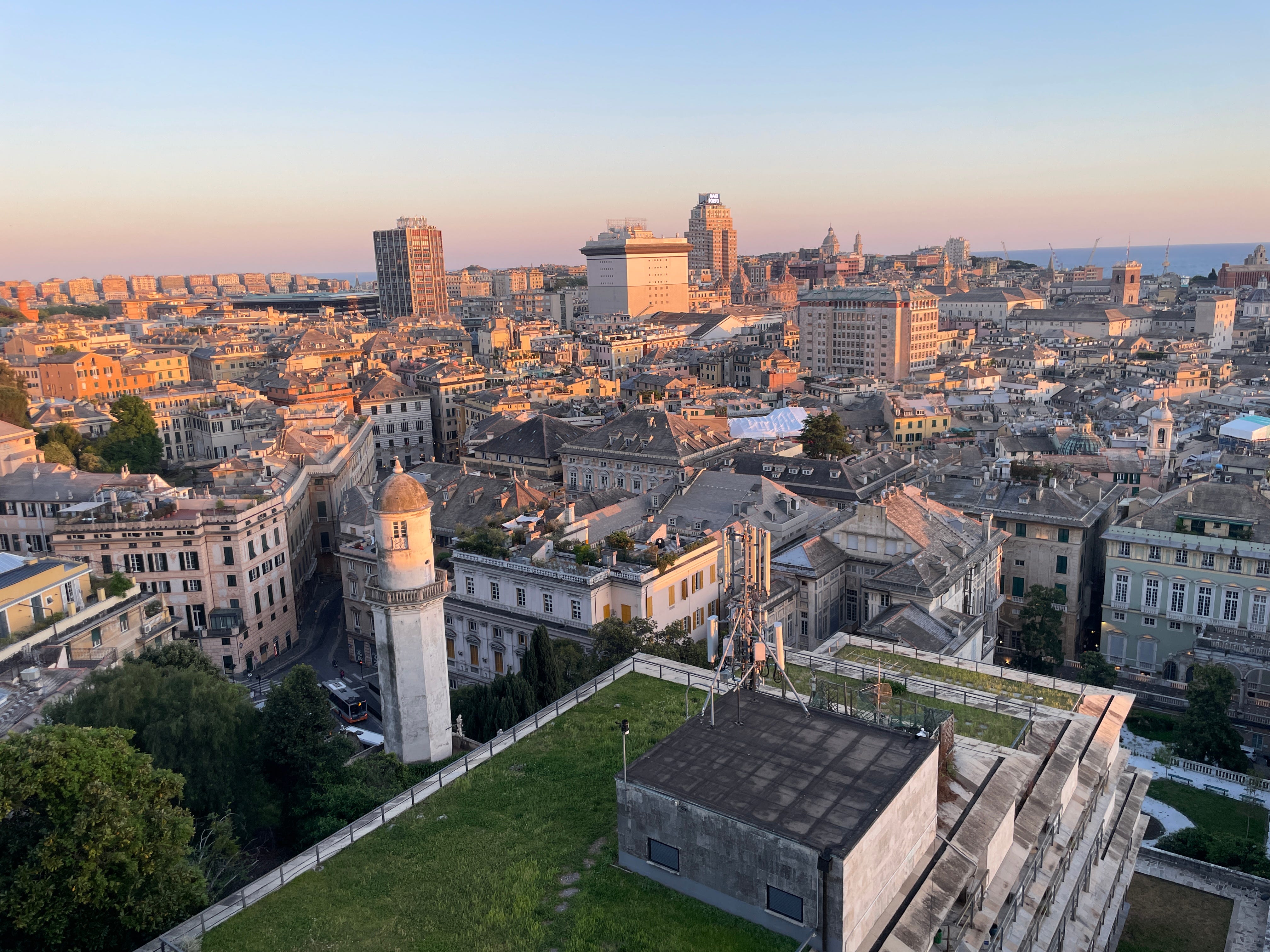
The legacy is a maze of narrow, canyon-like alleyways – known as caruggi – that could have been purpose-built for travellers in search of a digital detox. Even on the brightest Mediterranean day, little light penetrates these caruggi and most electromagnetic waves are neutered, sending Google maps haywire. Instead, you are thrown into an analogue world with only your wits to guide you.
If Genoa’s topography is a revelation, so is its social life.
“In the close crepuscular alleyways,” wrote Henry James in 1874, “the people are forever moving to and fro or standing in their cavernous doorways, calling, chattering, laughing, lamenting, living their lives in the conversational Italian fashion… I hadn’t for a long time seen people elbowing each other so closely or swarming so thickly out of populous hives.”
One hundred and fifty-two years later, we found little had changed. Our apartment was in a caruggi just behind the Piazza Caricamento. Turn right and we were plunged into the chaos of the Portico Antico with its aquarium and Museo del Mare, featuring a reconstruction of the harbour wall erected by the Genovese to repel Ottoman raiding parties in the fifteenth century. Turn left and we were rubbing shoulders with clerks on their way to work in the Via Bianci and housewives queuing for focaccia bread and pesto, Genoa’s most famous culinary products.
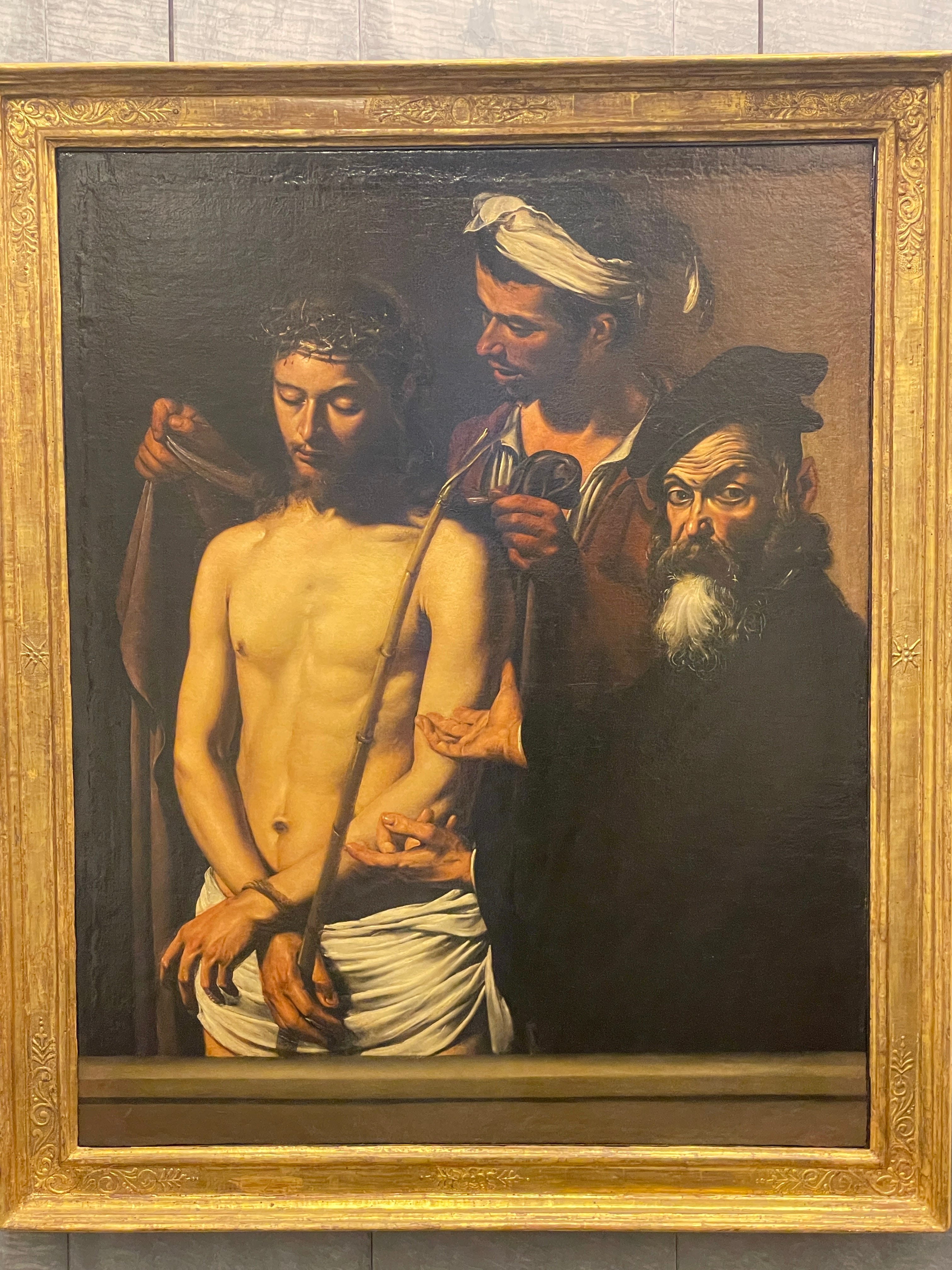
Luckily, we set off for the sights before the cruise boats had disgorged their passengers into the caruggi and arrived at the Palazzo Biancho just as it was opening. There, we had 15 minutes alone with Ecce Homo, Caravaggio’s masterwork showing Pontius Pilate presenting the bound and tortured figure of Christ to the crowd prior to his crucifixion (incredibly, the painting languished undiscovered in the Bianchi’s collections until 1921 and was initially dismissed as a copy!).
By the time we re-emerged onto the Via Garibaldi it was midday and the thoroughfare was heaving. Ducking into a side alley, we ran straight into a tour party just off the boat and – languishing in a nearby doorway – two women who, judging from their gaudy makeup and figure-hugging one pieces, were already open for business.
Unfortunately, our digital detox did not last long as back at our ninth-floor apartment the reception was perfect and I soon found myself falling into an AI rabbit hole. It began with a New Yorker podcast about the strides being made by Large Language Models (LLMs), such as Claude Opus, and continued when I clicked on an article about “AI companions”. Apparently, in a world where many people find it difficult to form flesh-and-blood relationships and loneliness is on the rise, more and more people are turning to chatbots for friendship. Unlike real friends, these synthetic personas are available 24/7 and always have plenty of time to chat. And when you’re feeling down, they can give you a “digital hug”. Some people find the experience so rewarding, they have begun forming romantic relationships with their AIs and discussing the practicalities of raising children, albeit with one “co-parent” stuck in the digital world.
There is nothing new about the decline of community and the connection between urbanisation and social isolation. As the French philosopher Jean-Jacques Rosseau recognised in his 1760 novel Julie or la nouvelle Heloise, with its fast pace modern city life can be extremely alienating. Writing to Julie from Paris, the protagonist of Rousseau’s novel complains:
“I am in the whirlpool of the world, where I struggle and am carried away like a straw… I am overwhelmed by a multitude of sensations but not one of them touches me deeply.”
Daisy Miller, the heroine of Henry James’s 1878 novella of the same name, experiences a similar sense of anomie in Rome as she wanders the city alone at night.
Genoa is different, however. As we discovered when we returned to street level and lost our phone signals, the city has a way of drawing you in. In our case, the transformation occurred the moment we stepped into the Via Banchi and were entranced by a haunting melody coming from the church opposite our apartment. Looking up, we saw that a dance troupe had gathered on the balcony of the church and were performing spins and handstands on the balustrades. The next moment, they clambered up and over the iron gate in front of the church and dropped stealthily into the crowd.
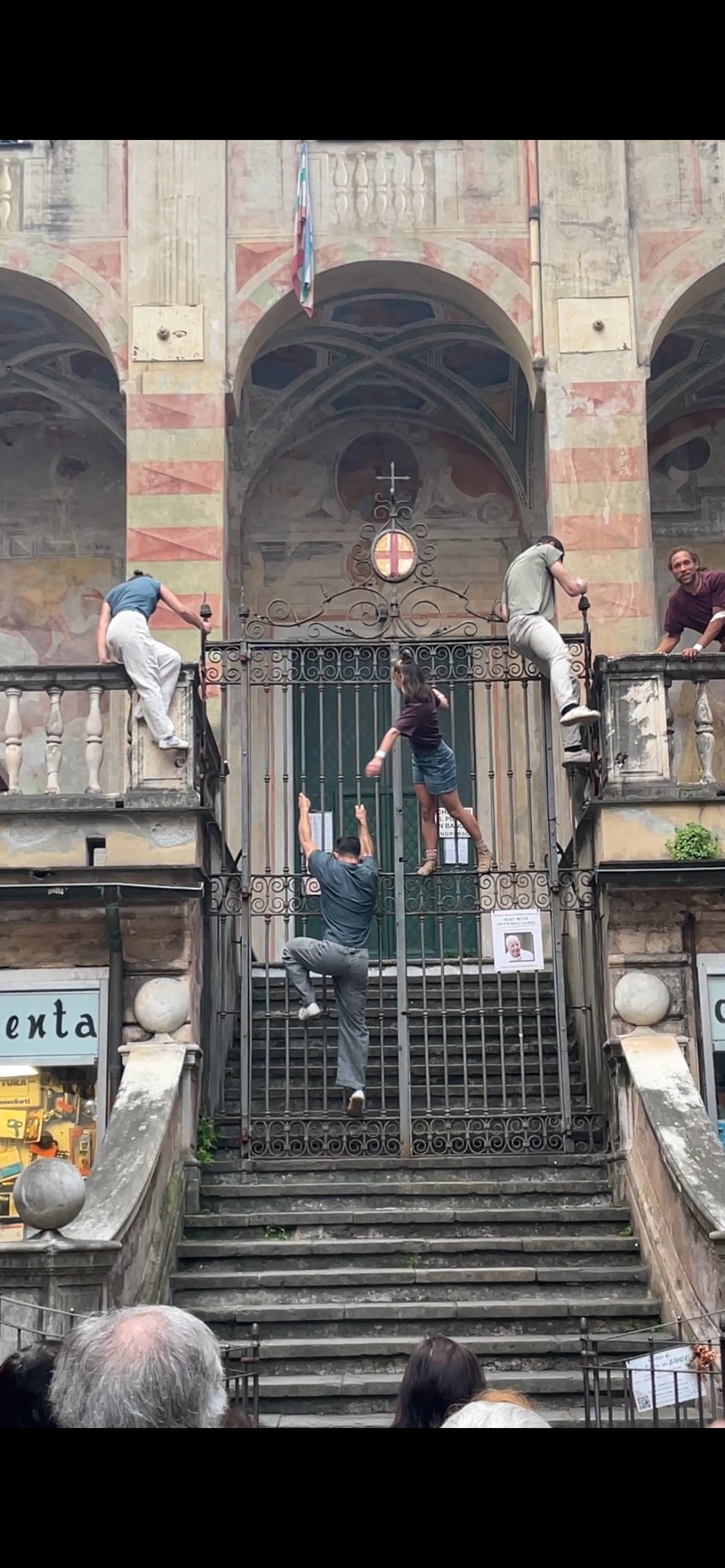
Soon, one of the dancers – a young man with dreadlocks – had cleared a space in front of us and was doing handstands and tumble turns. Meanwhile, the rest of the troupe began swinging each other from side to side and lifting one another onto their shoulders and outstretched hands. But the most transfixing part of the performance were the subtle looks and glances prior to each acrobatic feat.
It was a mesmerising and deeply human spectacle and, pressed elbow to elbow, we soon found ourselves following the troupe along a narrow alleyway to another square around the corner. There, the performance continued for a further 20 minutes.
No one solicited contributions or asked us for money. At one point, my wife, who had been drawn to the front of the crowd, was even rewarded with a hug. It was an incredibly intimate moment, a reminder that there are some things the digital realm cannot and will never be able to replicate.
But perhaps the most extraordinary part of the performance was the bond it created within the audience. We were strangers, yet plunging back into Genoa’s centro historico we felt connected in a way we hadn’t before. The performance had fostered a physical and emotional intimacy, reminding us that we were embodied social beings. Truly, it was an experience for the ages.